
HydroMassage vs. Infrared: Which Recovery Tool Is Best for Summer Inflammation
Summer training tends to come with a side effect a lot of people don’t expect: more inflammation, more often. Longer sessions, higher heat, and the temptation to add extra activity on top of an already full training week all add up. The result is muscles and joints that feel more reactive than usual, even when your program hasn’t changed much.
Fitness World members often ask me the same question this time of year. Should I use HydroMassage or infrared therapy to help my body recover? The honest answer is that both can help, but they work through different mechanisms, and understanding those mechanisms is what tells you which one is right for you.
This guide breaks down what each tool does, why summer heat makes inflammation more noticeable, and how to build both into a recovery routine that supports your training.
Key Recovery Insights for Summer Inflammation
Exercise-induced inflammation is a normal part of the adaptation process, but summer heat can amplify how it feels.
- HydroMassage works mechanically, using pressurized water to relieve surface-level muscle tension quickly.
- Infrared therapy works thermally, penetrating deeper tissue to support circulation and longer-term recovery.
- Neither tool replaces the fundamentals: hydration, sleep, and active recovery still do the heavy lifting.
- The most effective approach usually combines both tools at different points in your recovery cycle, not one instead of the other.
Table of Contents
- Why Summer Training Increases Inflammation
- What HydroMassage Does To Your Body
- What Infrared Therapy Does To Your Body
- HydroMassage vs. Infrared: Which One for Inflammation
- How to Reduce Inflammation Naturally This Summer
- Building a Complete Summer Recovery Routine
- Recovery Amenities at Fitness World
- FAQ
Why Summer Training Increases Inflammation
Inflammation gets a bad reputation, but it’s a normal and necessary part of how your body adapts to training. Understanding why it happens is the first step to managing it well.
Exercise-Induced Inflammation, Explained
When you train, muscle fibers experience small amounts of mechanical stress, sometimes called microtears. This triggers an inflammatory response, which is your body’s way of signaling repair. Swelling, soreness, and stiffness in the hours and days after a workout are largely a byproduct of this process, not a sign that something has gone wrong.
Most lifters know this feeling by its common name: DOMS, or delayed onset muscle soreness. It typically peaks 24 to 72 hours after a hard session, which is exactly the window when the inflammatory response is doing its repair work. That timing matters, since it tells you when recovery tools are likely to help most.
The issue isn’t inflammation itself. It’s when the body doesn’t get enough support to move through that process efficiently, which is where recovery tools come in.
Why Heat Makes It Worse
Summer conditions change the equation. Higher ambient temperature increases the demand on your cardiovascular system since your body is already working to regulate its temperature before you factor in the training itself. This can lead to greater fluid loss, more pronounced swelling, and a longer window before muscles feel back to normal.
Add in the tendency to train more often or push harder during the summer months, and it’s easy to see why members often report feeling more inflamed than usual this time of year, even without a major change to their program.
What HydroMassage Does To Your Body
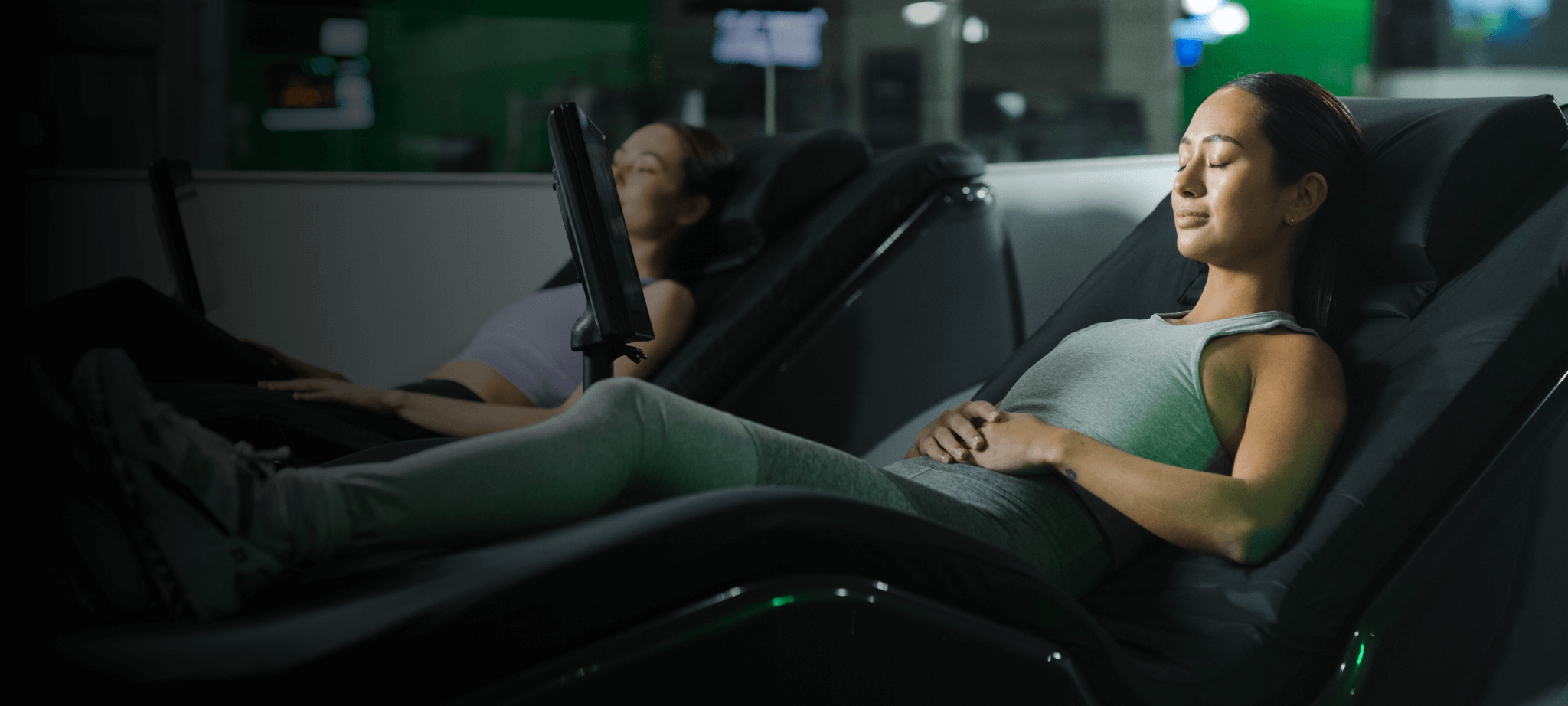
HydroMassage uses pressurized, heated water delivered through a bed or lounge system to apply mechanical pressure across the body.
Because the mechanism is mechanical rather than thermal, the effect is more immediate. Most people notice a reduction in tightness and tension within a single 10-to-15-minute session, especially in areas where muscles tend to guard or tense up after a hard session.
What HydroMassage is Best For
HydroMassage is particularly effective for addressing acute muscle tension, the kind you feel right after a hard training session.
What Infrared Therapy Does To Your Body
Infrared therapy, like the Joovv Infrared Light Therapy available at Fitness World, uses light wavelengths to generate heat that penetrates below the surface of the skin. Rather than warming the surrounding air the way a traditional sauna does, infrared light interacts directly with deeper tissue layers.
This deeper penetration supports circulation and helps the body clear metabolic byproducts more efficiently over time. Part of this comes from vasodilation, the widening of blood vessels in response to heat, which allows more blood to reach the tissue that needs it. The effect is less about immediate sensation and more about how your body responds across repeated sessions.
HydroMassage vs. Infrared: Which One for Inflammation
Neither tool is universally “better.” The right choice depends on what your body needs in that moment, like how you’d choose between heat and cold for a specific type of pain.
When HydroMassage Is the Better Call for Treating Inflammation
Rely on HydroMassage when you need fast, mechanical relief from tightness right after training. It’s especially useful on heavy training days when muscles feel overworked, but you don’t have symptoms of deeper joint inflammation.
When Infrared Is the Better Call for Treating Inflammation
Infrared therapy is the better fit when you’re managing ongoing stiffness, joint discomfort, or general fatigue that builds up over several days. Infrared therapy pairs well with rest days or lighter training days when your body has time to respond to the deeper thermal effect.
HydroMassage vs. Infrared at a Glance
| HydroMassage | Infrared Therapy | |
|---|---|---|
| Mechanism | Pressurized water, mechanical relief | Light-based heat, penetrates deeper tissue |
| Best for | Acute muscle tension after training | Ongoing stiffness and circulation support |
| Typical session | 10 to 15 minutes | 10 to 15 minutes |
| Best timing | Immediately after a workout | Rest days or lighter training days |
How to Reduce Inflammation Naturally This Summer
Recovery tools work best alongside the basics, not instead of them. A few habits make the biggest difference in how your body handles summer training load.
- Hydration. Fluid loss increases in the heat, and dehydration makes inflammation feel more pronounced. Replacing fluids consistently throughout the day matters more than trying to catch up after a session.
- Sleep. Most tissue repair happens during deep sleep. Shorter or lower-quality sleep during summer, often caused by heat or longer daylight hours, can slow that process down.
- Active recovery. Light movement on rest days, like walking or easy cycling, helps maintain circulation without adding additional training stress.
- Nutrition. Omega-3s from fatty fish or walnuts, antioxidant-rich foods like berries and leafy greens, and adequate protein all support the tissue repair process. Tart cherry juice specifically has some research behind it for modestly reducing DOMS symptoms, and limiting alcohol and added sugar helps avoid blunting recovery.
Many people ask about heat versus cold for inflammation specifically. As a general guide, cold therapy is more effective in the first 24 to 48 hours after an acute injury or intense session, while heat therapy works well for ongoing stiffness and muscle tension once acute swelling has settled.
| Heat Therapy | Cold Therapy | |
|---|---|---|
| Best for | Chronic stiffness, muscle tension, joint discomfort | Acute swelling, new injuries, sharp soreness |
| When to use | Before activity or during ongoing recovery | Within 24 to 48 hours after intense activity or injury |
| How it works | Increases blood flow and relaxes tissue | Constricts blood vessels and reduces swelling |
Building a Complete Summer Recovery Routine
Active vs. Passive Recovery
Recovery isn’t a single action; it’s a mix of active and passive strategies working together. Active recovery includes light movement that keeps blood flowing without adding training stress, such as walking, mobility work, or an easy bike ride. Passive recovery includes tools like HydroMassage, infrared therapy, and sleep.
Relying only on passive tools without addressing training load and movement quality won’t solve the underlying issue, and relying only on active recovery without giving your body true rest can leave you under-recovered over time.
Using Both Tools Together
A simple approach that works for most people is to use HydroMassage immediately after training to address acute tension, then use infrared therapy on rest days or lighter training days to support longer-term recovery.
Recovery Amenities at Fitness World
Fitness World members have access to both HydroMassage and Joovv Infrared Light Therapy, along with additional recovery tools like Hyperice percussion massagers and Normatec compression, all in one place.
You can find HydroMassage at Fitness World locations, and try Joovv Infrared Light Therapy at our South Surrey Signature club.
Try It With a Free 3-Day Pass
If you’re not yet a member, you can claim a free 3-day pass and experience HydroMassage and infrared therapy for yourself. If you’re ready to make recovery a regular part of your training, you can also explore membership options to find the plan that best fits your goals!
Frequently Asked Questions About Hydromassage & Red Light Therapy
Is infrared sauna safe to use regularly?
Yes, for most healthy adults. Infrared sessions are generally well tolerated, though anyone with a cardiovascular condition or who is pregnant should check with a doctor first.
Is HydroMassage or infrared better for inflammation?
It depends on the type of inflammation. HydroMassage is better for acute muscle tension right after training, while infrared is more effective for ongoing stiffness and supporting circulation over time.
How often should I use recovery tools like these?
Most people benefit from using HydroMassage after harder training sessions and infrared therapy two to three times a week, adjusting based on training volume and how your body responds.
How long should you stay in an infrared session for recovery benefits?
Most sessions run 10 to 15 minutes, which is enough time for the deeper tissue effects to begin without overtaxing your body’s ability to regulate temperature.
Does heat therapy help with arthritis-related inflammation, or just exercise-induced inflammation?
Heat therapy can help with both through increased blood flow and relaxed tissue. For arthritis, heat tends to work best for ongoing joint stiffness rather than an active flare-up.
Keep Building Your Recovery Routine With These Related Blogs
- Your Ultimate Recovery Cheat Sheet: Combining HydroMassage, Hyperice and Infrared for Total Results
- Sauna, Infrared & Cold Recovery: What Science Says About Spring Recovery Protocols
- From DOMS to Dominating: How to Structure Recovery During High-Volume Summer Training
Ready to Upgrade Your Recovery Routine?
Recovery is what allows your training to actually translate into progress. Claim your free 3-day pass and try HydroMassage and infrared therapy at a Fitness World location near you, or explore our membership options to build recovery into your routine long term.
About the Author
Brian Truong is the Director of Fitness Education at Fitness World Canada and Lead Instructor at the British Columbia Personal Training Institute (BCPTI). With a background in counselling psychology and extensive experience in strength training, movement coaching, and fitness education, Brian takes a holistic approach to performance that emphasizes long-term physical, mental, and emotional growth.
His work focuses on helping individuals build sustainable training habits that improve not only how they perform in the gym, but how they move, recover, and maintain their health over time.
